Caribbean Must Leverage Regional Integration to Unlock Investment and Sustainable Growth, CDB President Tells Commonwealth Forum
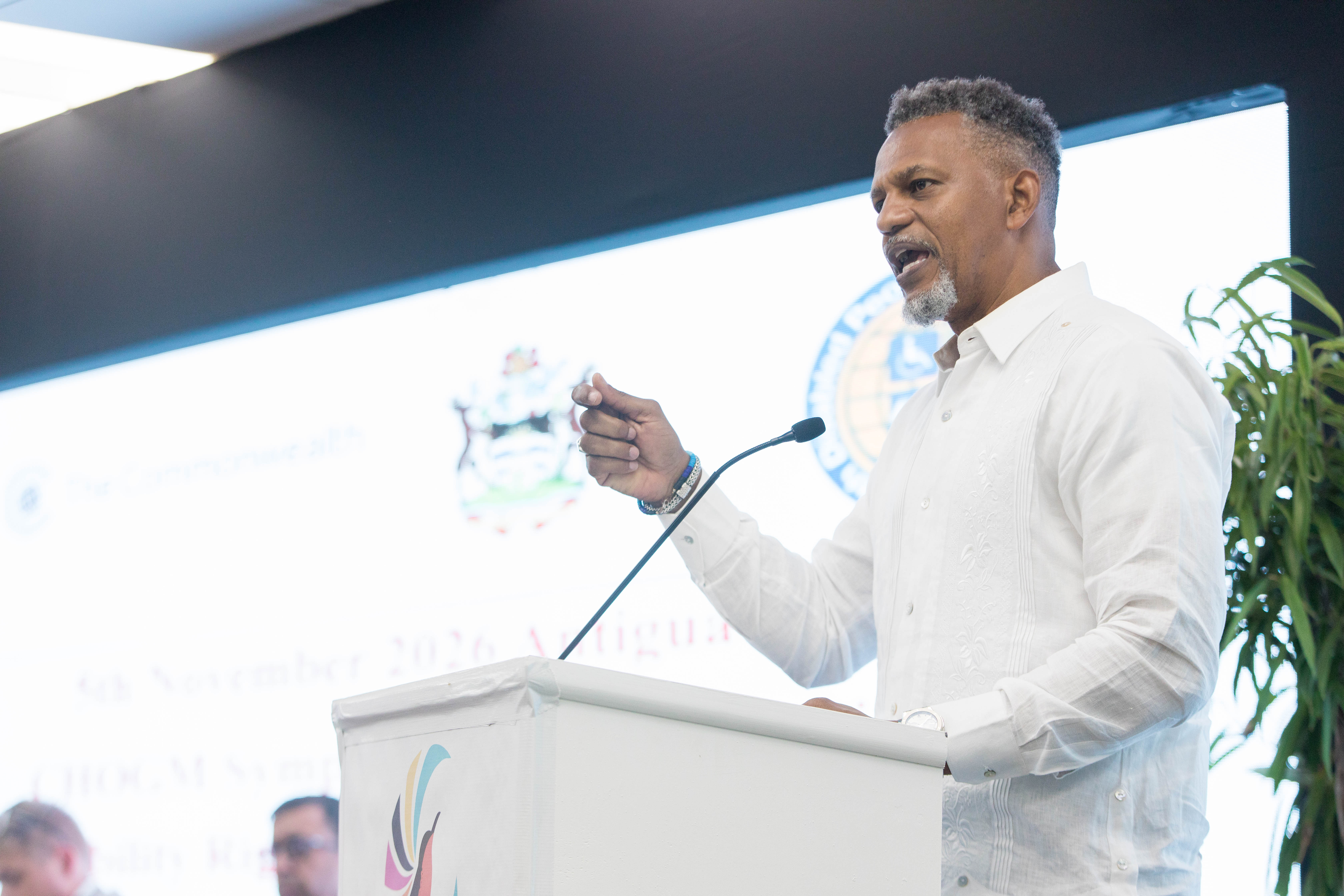
Stronger regional integration, innovative financing solutions, and greater collaboration among governments, investors, and development partners are essential to unlocking investment and accelerating sustainable growth across small states, said Mr. Daniel Best, President of the Caribbean Development Bank (CDB, the Bank).
Delivering the keynote address during the CDB-hosted plenary session,"Small States, Big Opportunities: Unlocking Investment and Growth Across the Commonwealth", at the Commonwealth Business Forum in Antigua and Barbuda, Mr. Best highlighted the immense potential of small states to compete and thrive in a rapidly changing global economy. He emphasised that by connecting markets, strengthening cooperation, and creating investable opportunities at scale, Caribbean countries can attract greater investment and expand economic opportunities for their people.
"Our countries have investment opportunities, entrepreneurial talent and products the world wants. By connecting those strengths, we can build the scale to reach larger markets, attract investment and compete more effectively. That is the opportunity regional integration offers," said Mr. Best.
Addressing business leaders, policymakers, investors, and development partners, the CDB President noted that while small states possess significant advantages, including renewable energy potential, growing digital capabilities, strategic geographic locations, thriving tourism sectors, blue economy assets, and creative industries, barriers within the global financial architecture continue to constrain development prospects.
Mr. Best identified three critical areas requiring urgent reform: improving access to affordable finance based on vulnerability as well as income, strengthening mechanisms to share and mitigate risk, and overcoming challenges associated with project scale in small economies. He underscored the importance of the Multidimensional Vulnerability Index as a tool to better inform financing decisions and called for expanded use of guarantees, insurance instruments, and regional project aggregation to attract capital.
The President also highlighted several initiatives through which CDB is advancing these priorities, including its Exposure Exchange Agreement with the Central American Bank for Economic Integration (CABEI), the Trade Finance Guarantee Programme with IDB Invest and JP Morgan, and efforts to establish a Caribbean Debt-for-Resilience initiative to help countries create fiscal space for resilience-building investments.
"We can open more markets to Caribbean businesses, bring projects from several countries together at a scale that attracts investment, and secure financing on terms that allow our countries to invest in their future. That is how we give the next generation of Caribbean entrepreneurs the room to grow at home and the opportunity to compete anywhere in the world," asserted Mr. Best.
The CDB President called on governments to make regional integration work more effectively for businesses, urged development partners to expand co-financing and guarantee arrangements, and encouraged investors to deepen engagement in sectors such as renewable energy, resilient infrastructure, sustainable tourism, digital services, the blue economy, and the creative industries.
In closing, Mr. Best noted that, with 33 small states among its 56 member countries, the Commonwealth is uniquely positioned to champion reforms and partnerships that help small economies access finance, strengthen resilience, and unlock new pathways for sustainable development.