Caribbean Development Bank President Showcases Innovative Financial Instruments to Lower Cost of Capital at FiCS G7 Special Event
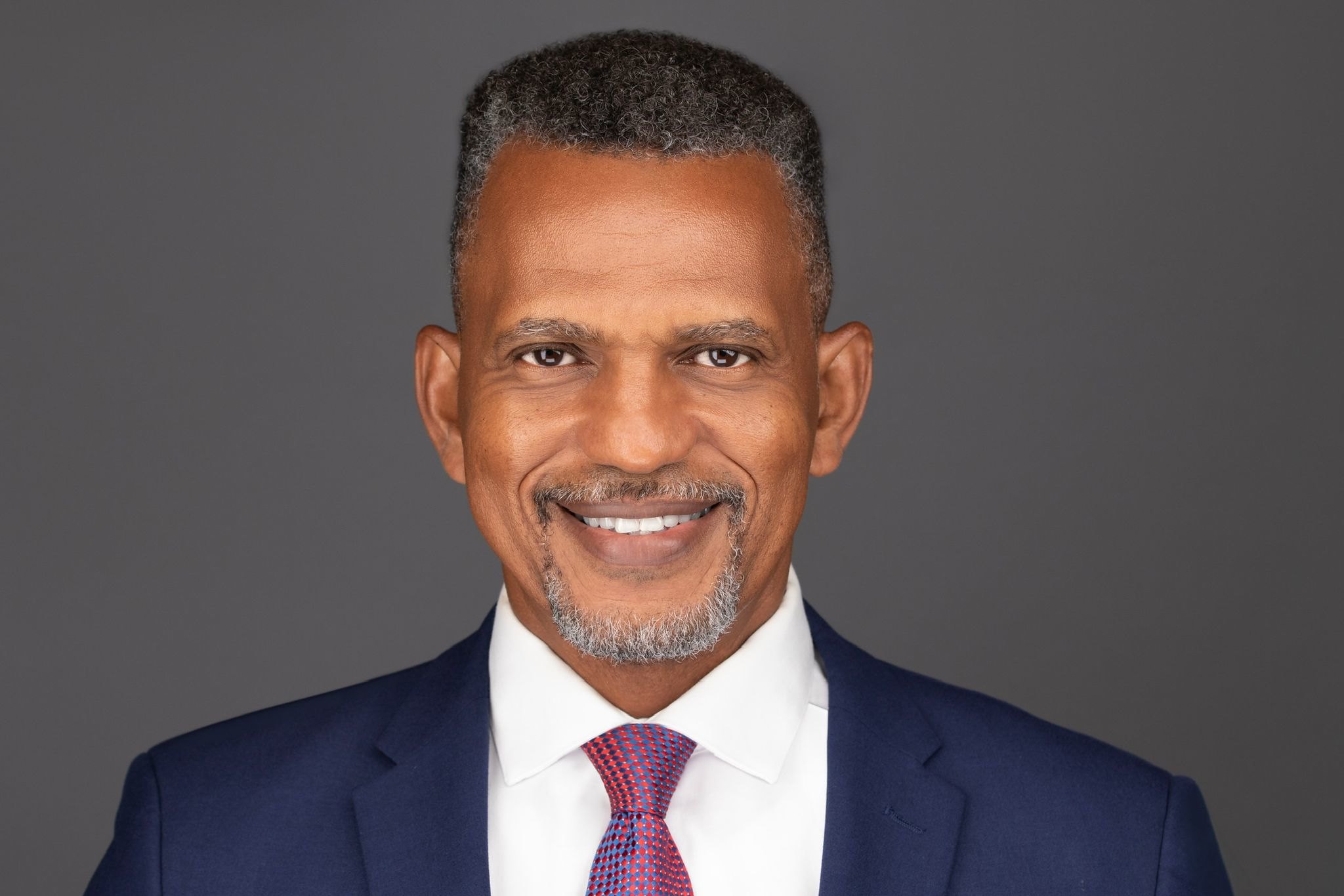
The President of the Caribbean Development Bank (CDB, the Bank), Mr. Daniel M. Best, highlighted the institution’s ongoing efforts to apply innovative financial approaches among Multilateral Development Banks (MDBs), outlining a suite of instruments designed to expand lending capacity, reduce borrowing costs, and unlock critical investment for climate resilience across the Caribbean.
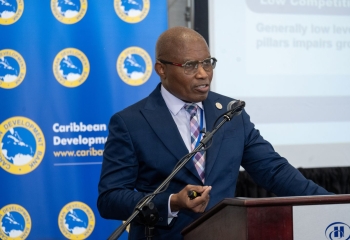
Speaking on April 29 at the FiCS G7 Special Event in Paris, on “Financial Instruments to Lower the Cost of Capital,” the President shared perspectives from the Caribbean, highlighting how smaller multilateral development banks can use targeted balance sheet measures to address structural constraints and expand their support to member countries.
A central highlight was CDB’s landmark Exposure Exchange Agreement (EEA), a US$450 million transaction executed with the Central American Bank for Economic Integration. The agreement, the first of its kind, significantly reduced concentration risk within CDB’s sovereign portfolio.
“In a single year, this transaction reduced our top five borrower concentration ratio from 61% to 38%, without any new shareholder capital injection,” Best noted. “For a small MDB like CDB, where concentration limits can constrain lending, this directly translated into increased capacity to serve our borrowing member countries.”
Building on this momentum, the Bank is advancing a US$200 million first-loss portfolio guarantee with the Government of Canada. Once finalised, the instrument is expected to unlock between US$300 million and US$400 million in additional lending capacity by reducing credit risk on CDB’s balance sheet.
He also underscored CDB’s leadership in collaborative MDB solutions, including the development of a multi-guarantor debt-for-resilience transaction alongside the Inter-American Development Bank, World Bank, and Development Bank of Latin America and the Caribbean (CAF). This initiative seeks to address the Caribbean’s dual challenge of high debt and climate vulnerability.
“By leveraging guarantees from MDB partners and private investors, we are creating fiscal space for countries to invest in resilience before disasters strike and without increasing net debt,” he explained. “The goal is to reduce borrowing costs, extend maturities, and enable proactive climate investment.”
Further reinforcing its forward-looking strategy, CDB is designing a Contingent Capital Facility (CCF) – an innovative loss-absorbing instrument intended to qualify as Tier 2 capital. Under this mechanism, highly rated shareholders would commit capital that is only called upon under predefined stress scenarios.
“This facility ensures that capital support is contractually available precisely when it is needed most, strengthening financial resilience while safeguarding our credit rating,” the President said.
President Best also emphasised that collaboration across the MDB system and alignment with credit rating agencies will be critical to scaling these innovations and ensuring they deliver meaningful reductions in the cost of capital for vulnerable regions.