CDB President: Resilience Must Be at the Heart of Caribbean Development
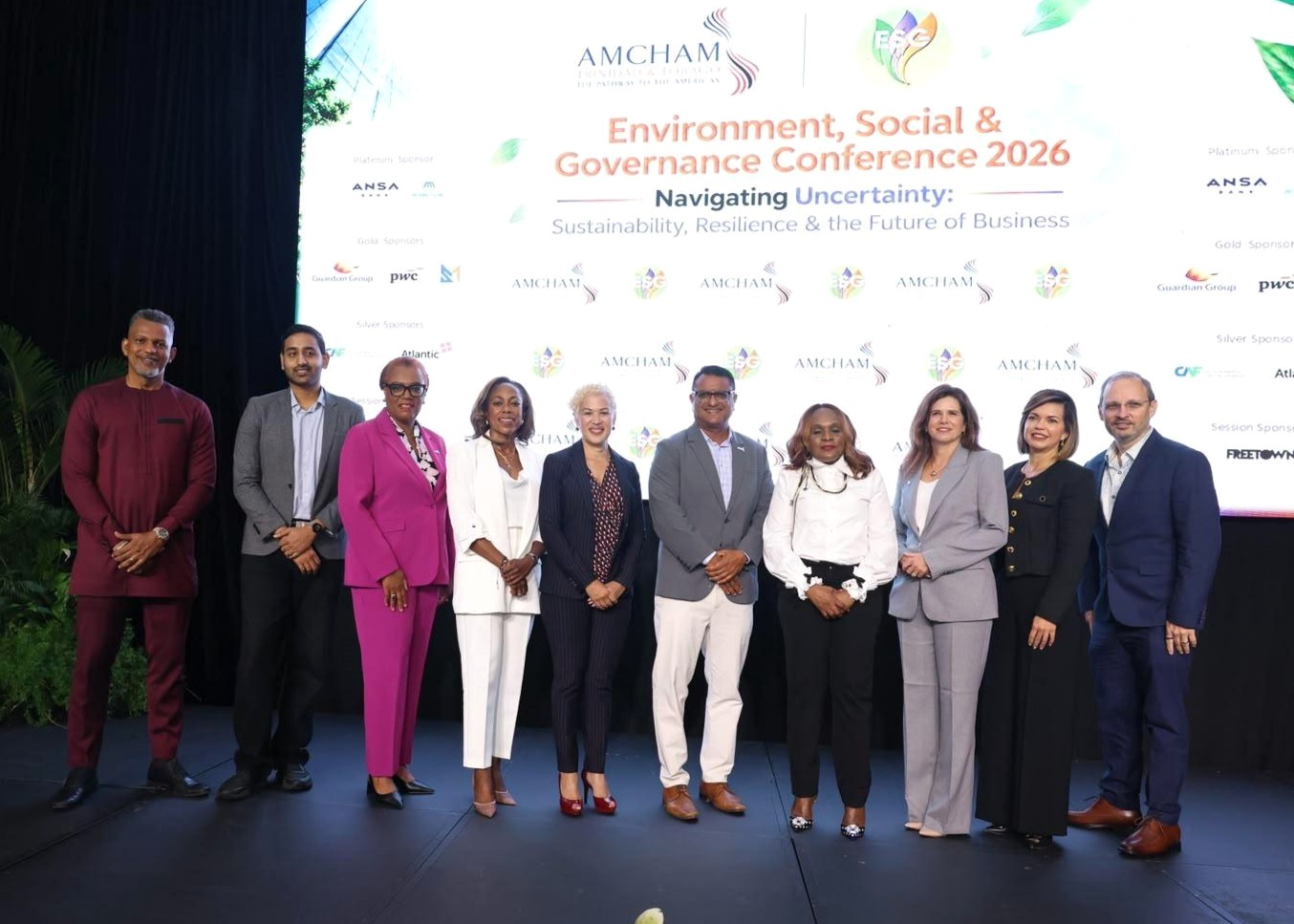
PORT OF SPAIN, Trinidad and Tobago, September 23, 2026 – Caribbean governments and businesses must make resilience a more deliberate part of planning, investment and decision-making to better navigate disruption, Caribbean Development Bank (CDB, the Bank) President, Mr. Daniel M. Best, has urged.
“Uncertainty is no longer an occasional disruption for the Caribbean, it is the environment in which governments, businesses, and citizens must now plan and prosper,” President Best said during his keynote address at the Environmental, Social and Governance Conference hosted by the American Chamber of Commerce of Trinidad and Tobago on September 15 in Port of Spain.
Speaking under the theme, “Navigating Uncertainty: Sustainability, Resilience & the Future of Business,” Best asserted that resilience is what will allow Caribbean businesses and economies to thrive amid uncertainty, rather than merely withstand it.
He noted that Environmental, Social and Governance (ESG) considerations have moved from the margins of corporate strategy to become central to how businesses manage climate and social risks, make investment decisions and strengthen long-term competitiveness. The President encouraged businesses to view ESG not simply as a reporting requirement, but as a practical framework for evaluating risk and guiding investment.
“The challenge before us is not how to eliminate uncertainty, nor whether a given policy or investment removes uncertainty, because nothing will, but how to build resilience that allows us to thrive despite it,” Best said.
Navigating Risk, Building Resilience
President Best outlined geopolitical tensions, shifting trade policies, climate change and rapid advances in artificial intelligence among the forces reshaping the operating environment for Caribbean economies. These pressures, he noted, are unfolding against a backdrop of modest regional growth. Across CDB’s Borrowing Member Countries, excluding Guyana, economic growth moderated to an estimated 0.6 percent in 2025, from 1.4 percent in 2024, with the Bank projecting an uptick to 1.1 percent in 2026.
In this environment, Best stressed the importance of strengthening countries’ capacity to absorb and recover from shocks. He pointed to fiscal preparedness in response to climate-related shocks as one example, noting that creating adequate fiscal space can help countries recover more quickly and access financing on better terms when disasters occur.
Amid the challenges, President Best highlighted encouraging developments, including stronger-than-expected tourism performance and progress in the renewable energy transition, which is helping countries reduce their exposure to imported fuel costs. He also pointed to Trinidad and Tobago’s efforts to balance its mature energy sector with economic diversification as an example with relevance for CDB’s Borrowing Member Countries.
Collaboration as a Caribbean Advantage
Building resilient economies will require coordinated action across the public and private sectors, President Best said.
He noted that governments have an important role in strengthening institutional capacity, creating an enabling environment for innovation and advancing digital adoption. The private sector also has an important contribution to make through greater innovation, competitiveness and engagement in national development. Together, these efforts create space for development institutions such as CDB to support countries in translating priorities into sustainable investments and outcomes.
President Best described the Bank’s role as fourfold: a trusted development partner to its 19 Borrowing Member Countries, a catalyst for sustainable investment, a convener of partnerships, and a provider of financing and knowledge.
He emphasised that CDB is leading by example, embedding ESG principles across its operations, strategic priorities, and financing commitments. This approach is reflected in the Bank’s new 10-year Strategic Plan, which places social, economic and environmental resilience at its core, alongside targets to direct 30 percent of total financing and 35 percent of concessional resources to climate adaptation and mitigation.
Best also highlighted CDB’s first sustainability bond, which raised CHF100 million on the Swiss market in 2025. The proceeds are intended to support projects in areas including climate resilience, renewable energy, water management, education, food security and micro, small and medium-sized enterprise development.
Closing his address, President Best described regional collaboration as one of the Caribbean's greatest untapped competitive advantages, outlining the potential of a single digital space for regional entrepreneurs, expanded regional food security, and shared renewable energy resources.
"Resilience is a team sport," he said. "The businesses and economies that thrive in the years ahead will be those that not only compete effectively, but collaborate strategically."