International Day of Education 2026: Caribbean Youth Chart Path Forward
As UNESCO observes International Day of Education 2026 under the theme "The power of youth in co-creating education," Caribbean students are offering clear, actionable recommendations to transform education across the region.
While sharing insights during the Caribbean Development Bank's (CDB) 2025 Regional Symposium and Policy Dialogue on Transforming Education last October, young people from across the Caribbean identified three critical areas for educational transformation: smarter use of technology, mandatory Technical and Vocational Education and Training (TVET), and stronger partnerships between families, schools, and communities.
Firstly, students are calling for a digital revolution in education to make technology work for them, bridge the generation gap, and ensure inclusion for all learners.
Naomi Jordan, a visually impaired student of Harrison College and First Vice President of the Barbados National Student Council, highlighted how digital tools make learning accessible and interactive for everyone. "The integration of technology in schools has made education more inclusive, interactive, and accessible, especially for students like me," she said. "Digital tools such as tablets and Google Classroom allow me to engage with lessons interactively, correct mistakes easily, and participate fully alongside my peers."
While students celebrate the benefits of digital tools, they also identified challenges. A significant generational gap persists as many parents and teachers are unfamiliar with how technology is used in learning, which can lead to overly restrictive or fear-based policies. Students recommend improving adult digital literacy so schools can address real challenges while promoting safe, responsible, and effective use of technology.
Beyond the digital classroom, students emphasised that preparing youth for the future requires practical, hands-on skills. They are calling for Technical and Vocational Education and Training (TVET) to be strengthened and made mandatory across the Caribbean, noting that practical skills are essential for future success but are not widely required in schools.
Rondelle Ned, Operations Coordinator in the Ministry of Legal Affairs in Guyana, emphasised that integrating TVET into curricula would provide tangible opportunities for students to thrive. "Skills are wealth, yet TVET is not widely mandatory across the Caribbean. Ensuring it is part of the curriculum would provide practical opportunities for students to succeed," he said.
At the Symposium students also highlighted findings from a 2025 consultation with secondary and tertiary learners across the region, showing meaningful parental and community involvement is essential for student success. They identified three key pillars of support: emotional support, effective communication, and community collaboration. Emotional support involves consistent care, encouragement, and presence to build confidence and resilience. Effective communication requires open, judgment-free dialogue that empowers learners. Finally, collaboration means parents, teachers, and the wider community must work together, both in person and digitally, to support students academically, socially, and culturally.
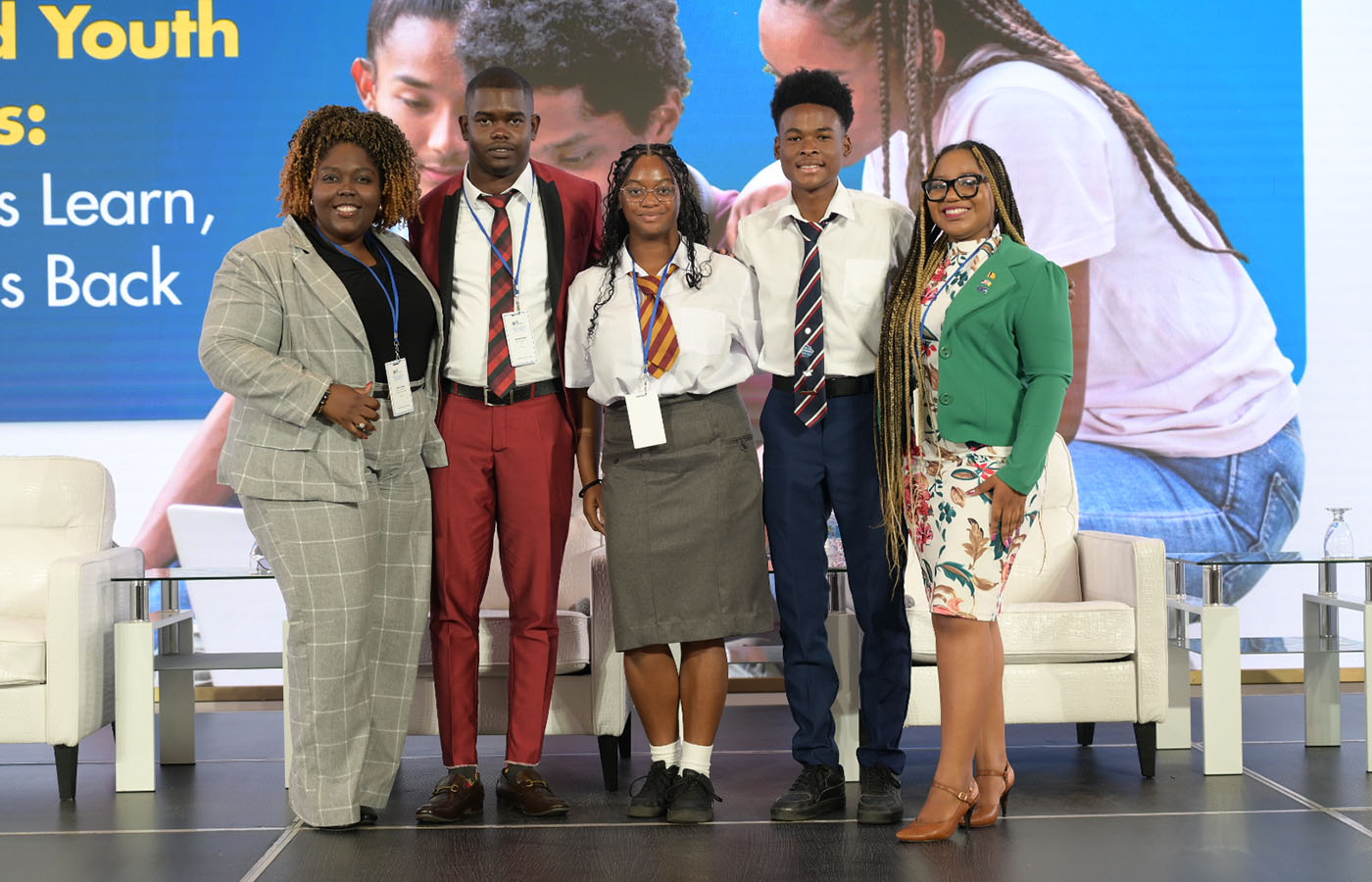
The student recommendations were presented during the "Student and Youth Perspectives: What Helps Us Learn, What Holds Us Back" session at CDB's 2025 Regional Symposium and Policy Dialogue on Transforming Education held last October. The session was part of the Bank's efforts to integrate student insights into policy support and to promote effective collaboration between families, teachers, and policymakers to transform regional education. These recommendations now resonate strongly with this year's International Day of Education theme, demonstrating the vital role of youth voices in shaping the future of Caribbean education.
###
Photo Caption: Country representatives from the Caribbean Development Bank’s (CDB) Future Leaders Network who lent their voices to a discussion on "Student and Youth Perspectives: What Helps Us Learn, What Holds Us Back" at the Bank’s 2025 Regional Symposium and Policy Dialogue on Transforming Education which was held last October in Barbados. From left: Gillian Rowe, attorney-at-law, Barbados; Rondell Nedd, Operations Coordinator in the Ministry of Legal Affairs, Guyana; Naomi Jordan, 1st Vice President of the Barbados National Student Council and Harrison College student, Barbados; Gevariah Young - President, Barbados National Student Council and student of Queen's College; and Rianka Chance - Global Youth Leader with the Global Partnership for Education; she is from SVG.