Caribbean Climate Leaders Demand Urgent Overhaul of Global Financial Architecture
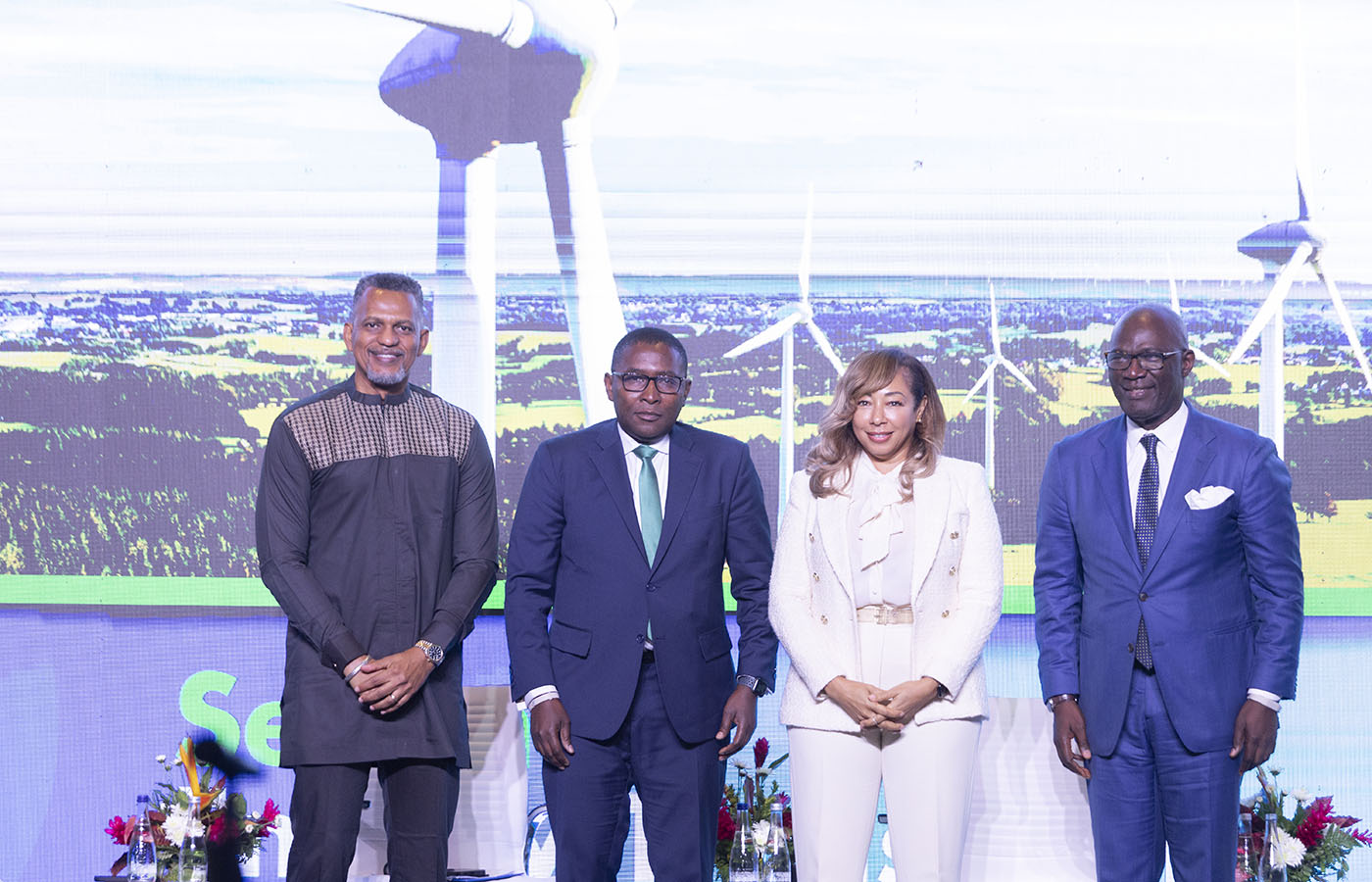
At a pivotal high-level dialogue, global climate finance leaders delivered an unambiguous message: the current international financial architecture is failing Small Island Developing States (SIDS), and the window for transformative action is closing fast. “The Breakfast Exchange: A Climate Talk on the Global Economy”, convened by the Caribbean Development Bank (CDB) at its recent 56th Annual Meeting, brought together some of the world’s most prominent voices on climate action and development finance. Moderated by CDB President Daniel M. Best, the consequential conversation was a frank, evidence-driven reckoning with what must fundamentally change to protect the Caribbean and other vulnerable regions.
Panellists included Mr. Ibrahima Cheikh Diong, Executive Director of the Fund for Responding to Loss and Damage (FRLD); Ambassador Selwin Hart, Special Adviser to the UN Secretary-General on Climate Action and Assistant Secretary-General of the United Nations; and Ms. Racquel Moses, CEO of the Caribbean Climate-Smart Accelerator (CCSA) and Chair of Glasgow Financial Alliance for Net Zero (GFANZ) Caribbean.
The conversation pulled no punches. Ambassador Hart cited a stark data point: since the Paris Agreement, four out of every five dollars invested in clean energy has gone to advanced economies, leaving just one dollar in five for the two-thirds of the global population living in developing countries. He argued that “the biggest failure in the current global financial architecture is that the system continues to reward the drivers of the climate crisis while penalising those that are vulnerable and contributed the least.”
Diong framed the challenge through what he called the “triple A” of climate finance, availability, accessibility, and affordability, arguing that pledges announced at global summits are meaningless until they reach countries in usable, affordable form. The FRLD, capitalised at USD 820 million in voluntary contributions, is working to change that, with its first disbursement window offering grant-only funding, at least 50% ring-fenced for SIDS and Least Developed Countries, and no new debt burden on recipients. “The keyword is delivery, delivery, delivery,” Diong affirmed. “We are talking about people’s lives here.”
President Best underscored the stakes of any delay with the region “caught between the climate crisis and a fragmenting global financial order”, emphasising that “development financing delayed is development financing denied.”
Ambassador Hart went further, calling for a fundamental reorientation of how the region accesses global finance. “CDB should be the region’s climate bank,” he said, arguing that small states of 30,000 or 40,000 people should not be expected to individually navigate accreditation to multiple global funds. He also identified a structural absurdity that drew audible agreement in the room: that countries like the Bahamas, Barbados, and Antigua and Barbuda remain excluded from grant and concessional finance on the basis of a single indicator — per capita income — while bearing disproportionate climate risk. Vulnerability, he insisted, must replace income as the defining criterion.
Moses brought a forward-looking dimension to the conversation, pointing to an emerging opportunity the region cannot afford to miss. “Right now the biggest thing that’s happening is AI, and they are looking everywhere to find energy for data centres. If we explore our true renewable energy potential, we will have excess energy that we can provide,” she said, warning that “these things happen in waves and when this wave is gone, it’s gone.” She also called on the region to move with urgency and unity, echoing Hart’s call for countries to work through shared regional institutions rather than duplicating effort.
Hart put the charge to the region itself as sharply as he put it to the international system: “Despite this climate crisis, our best days are yet ahead of us — but it requires us as a region to work as a region.”
The CDB’s 56th Annual Meeting was held in Nassau, The Bahamas, on June 1 – 5, 2026. The meeting included a slate of knowledge-sharing forums devised to tackle the most critical development challenges currently facing the region. The Breakfast Exchange: A Climate Talk on the Global Economy is available for viewing on the Bank’s website or YouTube channel.