CDB Advances New Solution to Expand Development Financing and Strengthen Crisis Response

October 14, 2026 - BRIDGETOWN, Barbados: The Caribbean Development Bank (CDB) has reached a major milestone in international development finance with the publication of a new working paper that provides a practical pathway for multilateral development banks (MDBs) to increase lending capacity, strengthen resilience to external shocks, and accelerate implementation of key G20-led reforms of MDB capital adequacy frameworks.
The paper, “From Concept to Contract: Contingent Capital Facilities and the G20 Reform of MDB Capital Adequacy Frameworks”, introduces the Contingent Capacity Facility (CCF), an innovative capital instrument designed to help MDBs make more effective use of existing shareholder capital while preserving financial strength. For CDB's Borrowing Member Countries (BMCs), wider adoption of the CCF model could support greater development financing capacity across the MDB system, helping institutions continue to provide critical financing when countries face economic, climate, or other external shocks.
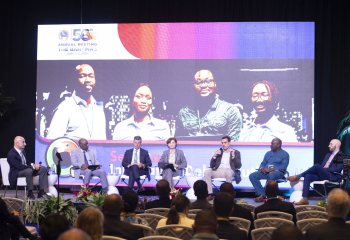
The publication was presented on October 14 in Bangkok, Thailand, on the margins of the International Monetary Fund and World Bank Annual Meetings. The event, hosted by CDB, brought together representatives from governments, MDBs, and development partners to discuss the role of innovative capital solutions in strengthening development finance institutions.
“In development finance, good ideas are plentiful. However, executed transactions are rare. Many promising instruments have stalled between the policy white paper and the signature page of a contract. That is why I want to put today’s milestone plainly. After three years of work, the CCF is ready to move from concept to contract. The tool is built. What remains is the step that turns a design into a precedent: signing the first CCF with a counterpart government,” said Daniel M. Best, President, CDB.
Developed with the support of the Children's Investment Fund Foundation and in collaboration with design partners Cantium, Ardhill Advisory, and Linklaters, the report explains how a CCF operates and outlines the policy, governance, and operational considerations MDBs would need to address before adopting the instrument.
Under a CCF arrangement, a shareholder government contractually commits to provide capital to an MDB if specified stress conditions are met. This pre-arranged support enhances the institution's capital adequacy and allows it to expand lending within its existing capital base while maintaining prudent risk management.
Importantly, the report moves beyond theory. It includes a suite of template legal agreements that MDBs can adapt to their own mandates, governance structures, and shareholder arrangements. In doing so, it transforms the CCF from a conceptual proposal into a practical, implementable instrument available to the wider MDB community.
The publication marks the culmination of work initiated by CDB in 2024 and is intended as a public good for the international development finance system.
The report also positions the CCF as a direct response to the G20 call for MDBs to optimise balance sheets, strengthen resilience, and modernise capital adequacy frameworks. By providing a mechanism to bolster lending capacity during periods of stress, the CCF can help MDBs maintain countercyclical lending when borrowing countries need support most. At the same time, its implementation encourages stronger capital modelling, recovery planning, and risk management practices, reinforcing the overall resilience of participating institutions.
"Development challenges are growing in scale and complexity, particularly for small and vulnerable economies," said Best. "The CCF offers a practical and credible way for MDBs to stretch scarce development finance resources further while strengthening the institutional resilience needed to support member countries through future crises."
The report, “From Concept to Contract: Contingent Capital Facilities and the G20 Reform of MDB Capital Adequacy Frameworks”, is available on the CDB website.
###