Evaluations & Resources

All OIE evaluation reports, briefs, and knowledge products are publicly available. Browse our full library, from in-depth evaluation reports and Management Response Action Plans to concise evaluation briefs and annual reports. Everything we publish is evidence-based, openly disclosed, and designed to be used.

To access the latest evaluations and resources, regularly check this page for updates.

Woman with both thumbs up

All OIE evaluation reports, briefs, and knowledge products are publicly available. Browse our full library, from in-depth evaluation reports and Management Response Action Plans to concise evaluation briefs and annual reports. Everything we publish is evidence-based, openly disclosed, and designed to be used.

To access the latest evaluations and resources, regularly check this page for updates.

SEARCH AND FILTER

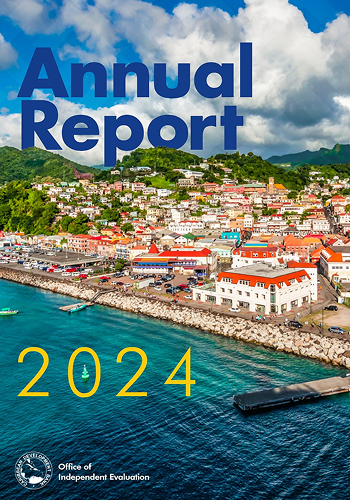
Annual Report 2024 thumbail

Annual Report

Annual Report on Evaluation 2024

In 2024, the Office of Independent Evaluation (OIE) moved from being a small, largely external-facing function to a genuine engine of learning within the Bank. The Peer Review by Inter-American Development Bank (IDB), International Fund for Agricultural Development (IFAD), and World Bank (WB) experts presented an honest mirror, and action was taken: a revised Evaluation Policy, a new Lessons Learned database, a Power BI dashboard tracking every recommendation in real time, and Gender-Responsive Evaluation Guidelines - all developed in 2024. Evaluations tackled the issues that matter most to the Caribbean: water security, climate resilience, poverty reduction, and how the Caribbean Development Bank's (CDB's) flagship concessional fund - the Special Development Fund - is performing on the ground. A first-ever Synthesis Study pulled together lessons from five country evaluations to sharpen future strategy. Expanding global reach, OIE represented the CDB at evaluation forums in China, Guatemala, and The Bahamas, advocating for evaluation approaches built for Small Island Developing States - not just adapted from elsewhere.

Gender guidelines thumbnail

Manual

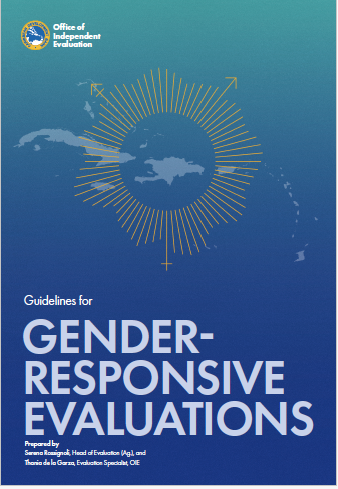
OIE Guidelines for Gender-Responsive Evaluations

The Office of Independent Evaluation's (OIE's) Guidelines for Gender-Responsive Evaluations provide practical guidance on integrating gender equality into all stages of the evaluation process - from planning and design through to reporting and use. Drawing on internationally recognised frameworks from UN Women and the European Institute for Gender Equality (EIGE), the guidelines support evaluation commissioners, evaluators, and Bank units in ensuring that OIE evaluations reflect the Caribbean Development Bank's (CDB's) commitment to gender equality and women's empowerment. The document covers evaluation criteria, methodological approaches, team composition, data collection practices, and communication standards, and includes ready-to-use tools and sample evaluation questions.

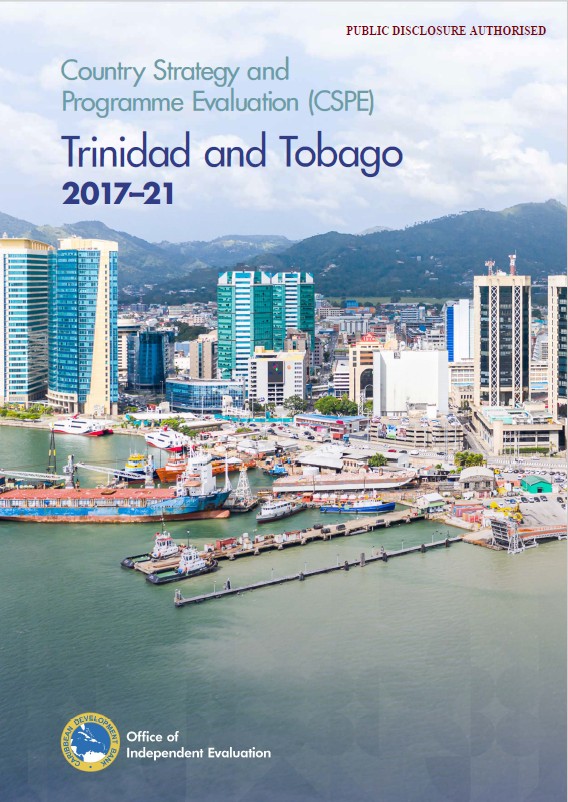
Cover

Evaluation Report

Corporate

Review of CDB's Education and Training Policy and Strategy (2017)

The Caribbean Development Bank (CDB) has a long history of engagement in the education and training sector, which is one of the Bank’s core areas of work. The current guiding framework for CDB’s work in the sector is the 2017 Education and Training Policy and Strategy (ETPS). The overall goal of the 2017 ETPS is to improve the quality of education in Borrowing Member Countries (BMCs), leading to increased learner outcomes producing a qualified, capable and representative workforce of diverse individuals, to reduce poverty and achieve inclusive social and economic development for the Region.This review was commissioned by CDB’s Office of Independent Evaluation (OIE) to assess the performance of CDB’s work in the education and training sector from 2017 to 2021 and inform an update or renewal of the ETPS by drawing lessons and making recommendations to improve the development effectiveness of the Bank's future strategies and programming. The review was framed primarily as a formative exercise to inform strategic questions about CDB’s contributions and its current role in the sector. It was conducted by Universalia Management Group (Universalia or UMG) from February 2022 to April 2023.

Cover

Evaluation Report

Country (CESE/CSPE)

Jamaica Country Strategy and Programme Evaluations 2014- 2016 and 2017-2021

This independent evaluation report covers two Jamaica Country Strategy and Programme (CSP) periods (2014-2 - 2016 and 2017-2021), including projects which fall under these CSPs and are completed or still being implemented.This evaluation examines the extent to which the Bank’s programme in Jamaica has achieved its intended outcomes and targets. It is intended to inform the Bank’s new Country Engagement Strategy (CES) which is expected to be finalised in 2023. The evaluation also aims to offer lessons and recommendations that may be used to course-correct CSP interventions that are still under implementation; improve development effectiveness going forward; and to provide options for the Bank’s consideration in its future engagement with Jamaica. It also serves to complement and add depth to the 2017-21 Strategy Completion Report, which was completed shortly before the evaluation started.

Cover

Evaluation Report

Sector

Evaluation of Community Disaster Risk Reduction Fund (2012-2020)

The Caribbean Development Bank’s (CDB) Office of Independent Evaluation has undertaken a final evaluation of the Community Disaster Risk Reduction Fund (CDRRF) and its eight sub-projects to assess their relevance, coherence, efficiency, effectiveness, and sustainability. The evaluation covers the implementation period of the Fund from 2012-2020 in four Borrowing Member Countries (BMCs): Jamaica, Belize, St Vincent and the Grenadines (SVG), and the British Virgin Islands (BVI).The CDRRF is a multi-donor trust managed by the CDB, with contributions from the Government of Canada, the European Union and the CDB, that was established in 2012 to help community members and groups to reduce their vulnerability to risks associated with natural disasters and to adapt to a changing climate.